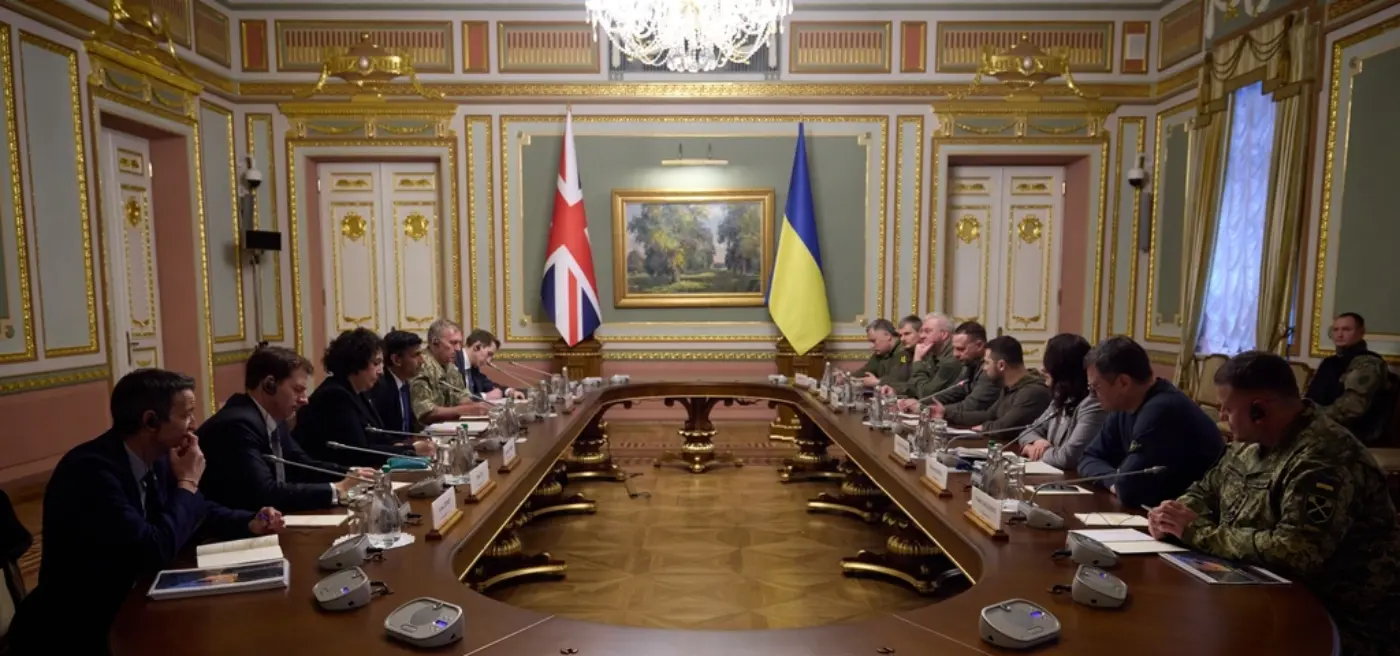
Zelensky told the BBC that the United States is too focused on the Middle East, delaying vital Patriot missile deliveries and not pressuring Russia enough in peace talks.
What happened
In a BBC interview from his Kyiv office, Ukrainian President Volodymyr Zelensky said the United States is prioritising the Middle East over Ukraine’s defence needs. He complained that the delay in delivering Patriot systemUS-made air defence system that shoots down missiles interceptors is costing Ukrainian lives.
Zelensky also called it “very strange” that former President Donald Trump posted a photo hugging Vladimir Putin, likening it to “hugging Adolf Hitler”. He said the United States is not pushing Russia hard enough during the Abu Dhabi peace talks, which are expected to resume in December.
The president noted that Ukraine can now destroy about 70 % of Russia’s fastest drones, but there is a “very, very big” deficit of interceptormissile designed to destroy incoming missiles or drones missiles needed to stop ballistic attacks. He blamed the United States for the shortfall and for restricting Starlink and its military version, Starshield, in occupied areas.
Zelensky warned that the ongoing air alerts and frequent Russian ballistic missilemissile that follows a high‑arc trajectory to reach distant targets strikes are pushing civilian casualties to an all‑time high.
Why it’s important
Delays in Patriot system deliveries affect defence contractors that supply the United States and its allies, potentially shifting market demand toward other air‑defence providers. Investors watch such geopolitical supply‑chain issues closely because they can move stock prices of aerospace and defence firms.
The United States’ focus on the Middle East may signal a broader strategic re‑allocation of resources, influencing oil markets and the pricing of energy commodities tied to regional stability. A prolonged conflict in Ukraine also keeps sanctions on Russia in place, affecting global commodity flows.
Finally, the lack of US pressure on Russia could prolong the war, keeping uncertainty high for European economies that rely on stable energy supplies and trade routes.
Zelensky said Ukraine can now destroy about 70 % of Russia’s fastest drones.
What could change
If the United States accelerates delivery of Patriot systems and other interceptors, Ukraine’s air defence could improve, potentially reducing civilian casualties and easing market concerns about the conflict’s duration.
Conversely, if US attention remains on the Middle East and diplomatic pressure on Russia stays limited, the war could drag on, keeping defence spending high and maintaining volatility in energy and commodity markets.
A continued shortfall of Patriot interceptors could lead to higher civilian casualties and heightened market volatility.
What does this mean for investors?
Retail investors may consider exposure to defence ETFs that hold companies producing air‑defence systems, as well as aerospace firms that could benefit from increased orders. Energy‑related stocks might react to any shifts in US focus between the Middle East and Ukraine.
Bond investors should watch sovereign risk premiums for countries directly involved in the conflict, as prolonged instability can affect credit spreads.
Disclaimer: This post was created with the support of artificial intelligence and reviewed by our editorial team. It is provided for educational purposes only and does not constitute financial advice.